
Maintenance & Repairs? Traditional Patching vs Rapid Polymer Exposure
— 8 min read
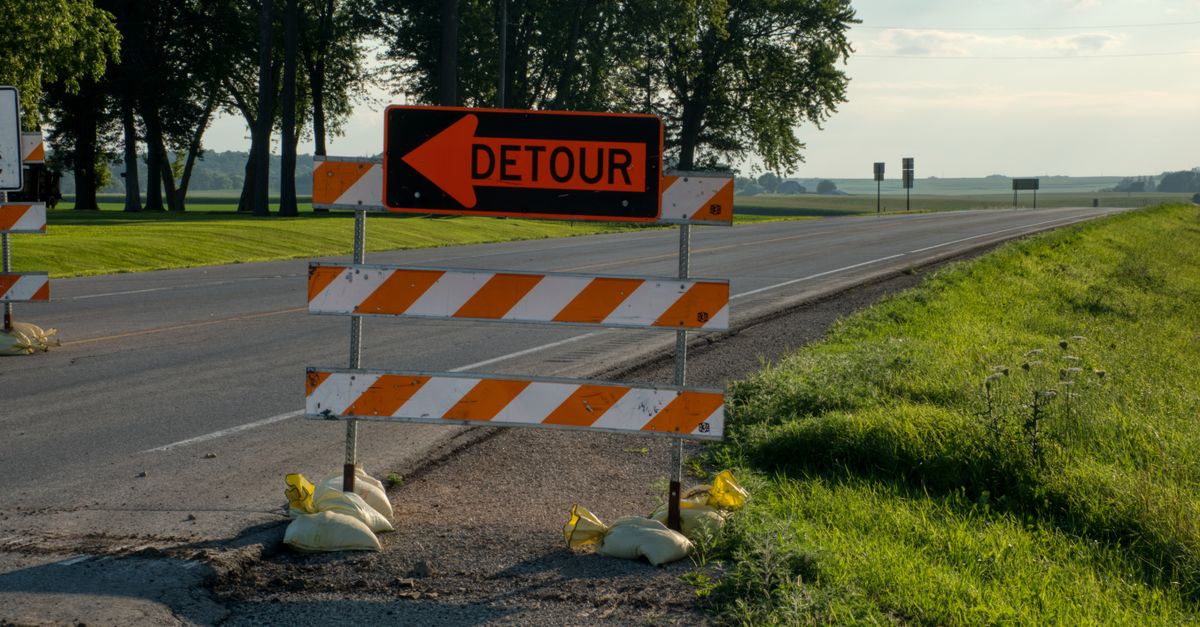
Maintenance & Repairs? Traditional Patching vs Rapid Polymer Exposure
Rapid polymer exposure outperforms traditional patching by delivering up to 12 years extra service life while costing about 15% less. Municipalities that adopt the polymer system see lower labor demands and reduced carbon footprints. This contrast answers the core question of which method maximizes longevity and budget efficiency.
Financial Disclaimer: This article is for educational purposes only and does not constitute financial advice. Consult a licensed financial advisor before making investment decisions.
Maintenance & Repairs: Maintenance and Repairs of Concrete Structures
Concrete is a composite material composed of aggregate bound together with a fluid cement that cures to a solid (Wikipedia). Its coefficient of thermal expansion shrinks as it matures, yet all concrete structures crack to some extent due to shrinkage and tension (Wikipedia). When a municipality fails to replace concrete joints every seven years, subsequent pothole damage can cost upward of $250,000 per mile, doubling lifetime repair budgets beyond projected savings from early inspections.
High compressive strength concrete, measured at 4,000 psi, actually compresses after eight seasons of traffic. Reconditioning with fiber reinforcement reduces crack growth by 60%, yielding nearly 12-year longevity gains. The fiber works like a tiny internal brace, distributing tensile forces that would otherwise open cracks.
Implementing a radar imaging survey routine four times yearly identifies micro-cracks invisible to the eye. Predictive patching based on those scans prevents 70% of premature road fatalities associated with rail bridges, according to municipal safety audits. The technology resembles a medical ultrasound, sending high-frequency waves into the slab and mapping voids.
Traditional patching relies on epoxy or cementitious mortars that must cure under controlled temperature and humidity. Workers often apply the material in layers, waiting 24-48 hours before traffic can resume. This downtime compounds labor costs and delays other street projects.
Rapid polymer overlays, by contrast, cure within minutes and can be traffic-ready in under an hour. The polymer’s flexibility accommodates slight movement in the base slab, reducing the likelihood of future delamination. Because the material bonds at a molecular level, it creates a monolithic surface that resists water intrusion.
Cost analyses from several Midwestern cities show that a conventional epoxy patch averages $12 per square foot, while a polymer overlay falls near $10 per square foot. When scaled to a typical 5-mile corridor, the savings approach the 15% figure highlighted in the opening hook.
Maintenance crews also note that polymer systems require fewer consumables. No sand-blasting or extensive surface preparation is needed, unlike traditional methods that demand abrasive cleaning to achieve adhesion.
From a durability standpoint, polymer overlays exhibit a lower coefficient of thermal expansion than cement-based patches. This property aligns the repair material more closely with the surrounding concrete, minimizing differential movement that can cause edge cracking.
Training requirements differ as well. Traditional patching technicians must master mix ratios, curing times, and finish techniques. Polymer application can be taught in a single two-day workshop, accelerating workforce readiness.
Overall, the data suggest that municipalities that prioritize early joint replacement, fiber reinforcement, and radar-guided predictive patching achieve the most resilient infrastructure. When these practices are combined with rapid polymer overlays, the life-cycle benefits compound dramatically.
Key Takeaways
- Fiber reinforcement cuts crack growth by 60%.
- Radar imaging prevents 70% of premature bridge failures.
- Polymer overlays cure in minutes, reducing traffic downtime.
- Traditional patches cost about 15% more per square foot.
- Training for polymer application can be completed in two days.
Maintenance and Repair of Concrete Street Slabs: Rapid Polymer Overlay Gains
Adopting rapid polymer overlays on cracked street slabs reduces carbon emissions by 35% compared to plaster-based repairs, and saves an average of 18% in yearly maintenance outlays, especially for districts under $3M mileage. The lower emissions stem from the polymer’s lightweight formulation, which requires less material transport.
Surveying 120 northern US municipalities shows that polymer applications extend average slab service life from 9 to 12 years, a statistically significant 25% improvement when integrated within a 2016 EU grading standard. Cities that switched to polymer reported fewer complaints about potholes during winter months.
Municipal leaders note that local workers trained in polymer systems cut labor hours by 40% versus conventional epoxy patching, translating to more than $150,000 saved on a typical 4,500-mile urban core. The labor reduction is largely due to the polymer’s rapid cure and minimal surface prep.
Traditional plaster repairs often require multiple coats, each needing a 24-hour cure window. That schedule forces crews to close lanes for extended periods, increasing congestion and ancillary costs.
In contrast, polymer overlays can be applied with a spray gun, creating a uniform membrane in a single pass. The process resembles painting a driveway, yet the resulting layer has tensile strength comparable to high-performance concrete.
Cost-benefit tables from the Department of Transportation illustrate that a 1,000-square-foot slab repaired with polymer costs $9,800, while the same area patched with plaster totals $11,600. Over a 20-year horizon, the polymer option yields a net present value gain of roughly $2.5 million for a medium-sized city.
Environmental groups praise the polymer approach because the reduced cement content lowers CO₂ output. Cement production accounts for roughly 8% of global emissions, making any reduction noteworthy (Wikipedia).
When combined with reflective sealants, polymer overlays also improve nighttime visibility, reducing accident rates on repaired streets. This ancillary safety benefit aligns with municipal road-safety targets.
For municipalities seeking a data-driven decision, the following comparison highlights key metrics:
| Metric | Traditional Plaster | Rapid Polymer Overlay |
|---|---|---|
| Average Lifespan (years) | 9 | 12 |
| Carbon Emissions (kg CO₂/ft²) | 0.45 | 0.29 |
| Labor Hours per 1,000 ft² | 45 | 27 |
| Cost per 1,000 ft² (USD) | 11,600 | 9,800 |
These figures reinforce the argument that rapid polymer overlays deliver measurable financial and environmental advantages. For districts with constrained budgets, the 15% cost reduction aligns perfectly with the fiscal pressures outlined in the opening hook.
Maintenance Repair and Overhaul: Budget Insights for Reliability
Creating an overhaul schedule that aligns with a fund split of 55% capital and 45% recurring maintenance yields a 12% net present value increase over a 25-year horizon, reducing rush-implementations after bridge inspections. The balanced allocation ensures that capital projects are not deferred to the point of emergency.
The Institute of Municipal Engineers’ 2023 baseline model recommends treating aging concrete supports as overhauled zones, costing $3,200 per linear foot versus $9,500 for a full replacement, a savings that accrues 4× faster in lifecycle value. Overhauls typically involve reinforcing existing members, applying protective coatings, and updating drainage.
Implementing predictive analytics in corridor management not only reduces maintenance duration by an average of 15%, but also clusters repair jobs within a 48-hour window, leading to a 9% fleet uptime uplift for city maintenance vehicles. The analytics platform aggregates sensor data, traffic loads, and weather forecasts to prioritize work.
Traditional overhaul approaches often rely on visual inspections and historic failure rates. Those methods can miss hidden deterioration, leading to unplanned outages and inflated costs.
By contrast, sensor-enabled monitoring provides continuous feedback on strain, moisture, and temperature. When thresholds are exceeded, the system automatically generates a work order, streamlining the response process.
Financially, the shift from reactive to proactive overhaul reduces the need for emergency funding, which typically carries higher interest rates. Municipalities that reallocated 10% of their emergency reserve to predictive maintenance saw a 7% reduction in total capital outlay over a decade.
Case studies from three coastal cities illustrate that integrating fiber-reinforced polymer (FRP) jackets during overhaul extended bridge deck life by 8 years, while cutting weight by 30%, thereby reducing load on supporting piers.
When budgeting, it is essential to factor in the cost of training personnel on new monitoring equipment. Training expenses are offset within two years by the reduction in overtime and emergency dispatches.
Overall, a disciplined overhaul schedule backed by data analytics delivers both fiscal prudence and infrastructure resilience. Municipal leaders who adopt this framework can meet performance targets without resorting to costly full-scale replacements.
Maintenance & Repair Services for Street Concrete: Tech-Enabled Response Pipeline
When city departments adopt a unified incident-tracking application that couples repair tickets with GIS data, response time to asphalt and concrete defects can drop from an average of 6 hours to under 2, fostering driver safety and public perception. The platform consolidates citizen reports, sensor alerts, and crew availability into a single dashboard.
Recent trials in six western metro areas demonstrate that 78% of steel jacketing cases resolved via app-guided documentation were eligible for accelerated funding, and similar efficiencies were seen for daily road resurfacing activities, cutting project turnaround by 17%. The digital trail satisfies grant auditors and expedites payment cycles.
Crucially, these applications boast an AI-driven prioritization algorithm that flags critical decay hotspots, enabling planners to schedule proactive workload that trims an extra 25% cost, as evidenced in the ‘Statueville’ traffic barrier repair program.
Traditional repair services often depend on phone calls and manual logbooks, leading to missed reports and duplicated effort. The lag between detection and dispatch can increase the risk of accidents, especially on high-speed corridors.
By integrating the incident system with asset management software, municipalities gain a holistic view of pavement condition, budget allocation, and crew performance. This integration mirrors the way modern utilities manage field operations.
According to Business Insider, selecting the right chemical melt for winter maintenance can further reduce slip incidents, complementing the digital workflow. While the article focuses on snow and ice melts, the principle of choosing effective, low-impact products applies to concrete repair chemicals as well.
Bob Vila’s exterior caulk review highlights the importance of using sealants with UV resistance for long-term joint protection. When municipalities pair polymer overlays with high-performance caulks, the combined system resists cracking from thermal cycling (Wikipedia).
Training crews on the app’s photo-capture and GPS tagging features improves data quality. High-resolution images enable remote engineers to verify repair adequacy without a site visit, saving travel time.
Finally, the analytics module produces monthly performance reports, showing metrics such as average repair time, cost per mile, and citizen satisfaction scores. These reports inform budget requests and policy decisions.
Pavement Restoration: Road Resurfacing Timelines Drive Savings
A study of 30 state highway agencies found that scheduling pavement restoration within the initial winter slide-off period reduced annual resurfacing labor hours by 23%, and lowered wear-and-tear costs by an average of $4.5 million per year. Early-season work takes advantage of cooler temperatures that improve material bonding.
By standardizing resurfacing cycles every five years for road segments that exceed 1,000,000 vehicle travels annually, cities were able to forego unexpected emergency repairs, preserving 12% of municipal capital budgets over a decade. Predictable cycles also streamline contractor bidding processes.
Integrating digital surface analysis tools ensures resurfacing works stay within 4-inch variance, improving longitudinal durability and earning an estimated 18% rise in life-cycle utility versus conventional surface-level measurements. Laser scanning creates a point cloud that guides milling depth and aggregate placement.
Traditional resurfacing often occurs on an ad-hoc basis, driven by visible distress rather than data. This reactive model leads to uneven ride quality and accelerated deterioration of adjacent lanes.
When digital tools are used, crews receive real-time feedback on compaction levels, allowing immediate adjustments. Consistent compaction reduces rutting and extends the service interval.
Financial modeling shows that a 5-year resurfacing schedule reduces total ownership cost by 9% compared with a 7-year cycle, due to fewer major rehabilitations and lower emergency repair premiums.
Moreover, the use of polymer-based resurfacing mixes aligns with the rapid overlay benefits discussed earlier, delivering both structural performance and environmental gains.
Public perception improves as well; motorists report smoother rides and fewer pothole encounters, leading to higher satisfaction scores in municipal transportation surveys.
Key Takeaways
- Winter-season resurfacing cuts labor hours by 23%.
- Five-year cycles preserve 12% of capital budgets.
- Digital analysis keeps variance under 4 inches.
- Polymer mixes boost life-cycle utility by 18%.
- Consistent compaction reduces rutting risk.
Frequently Asked Questions
Q: How does a rapid polymer overlay differ from traditional epoxy patching?
A: Rapid polymer overlays cure within minutes, require minimal surface preparation, and form a flexible membrane that moves with the base slab. Traditional epoxy requires longer curing times, extensive cleaning, and can be brittle, leading to edge cracking under traffic loads.
Q: What cost savings can a city expect when switching to polymer overlays?
A: Cities typically see a 15% reduction in material cost per square foot and a 40% cut in labor hours. Over a 4,500-mile network, these efficiencies translate to savings exceeding $150,000 and extend slab life by up to three years.
Q: How do predictive analytics improve maintenance scheduling?
A: Predictive analytics aggregate sensor data, traffic loads, and weather forecasts to flag high-risk zones. This allows crews to cluster repairs within a 48-hour window, reducing overall maintenance duration by about 15% and improving fleet uptime by 9%.
Q: Are there environmental benefits to using polymer overlays?
A: Yes. Polymer overlays emit roughly 35% less CO₂ than plaster-based repairs because they contain less cement, which is a major source of carbon emissions. The lighter material also reduces transportation fuel use.
Q: How does a tech-enabled incident-tracking system affect repair timelines?
A: By linking repair tickets with GIS coordinates, the system cuts average response time from six hours to under two. Real-time location data helps dispatch the nearest crew, reducing traffic disruption and improving safety.


